
Available for the first time in spanish
Discover the story and life of this influential Quaker and freedom-for-all advocate, as told in his own words.
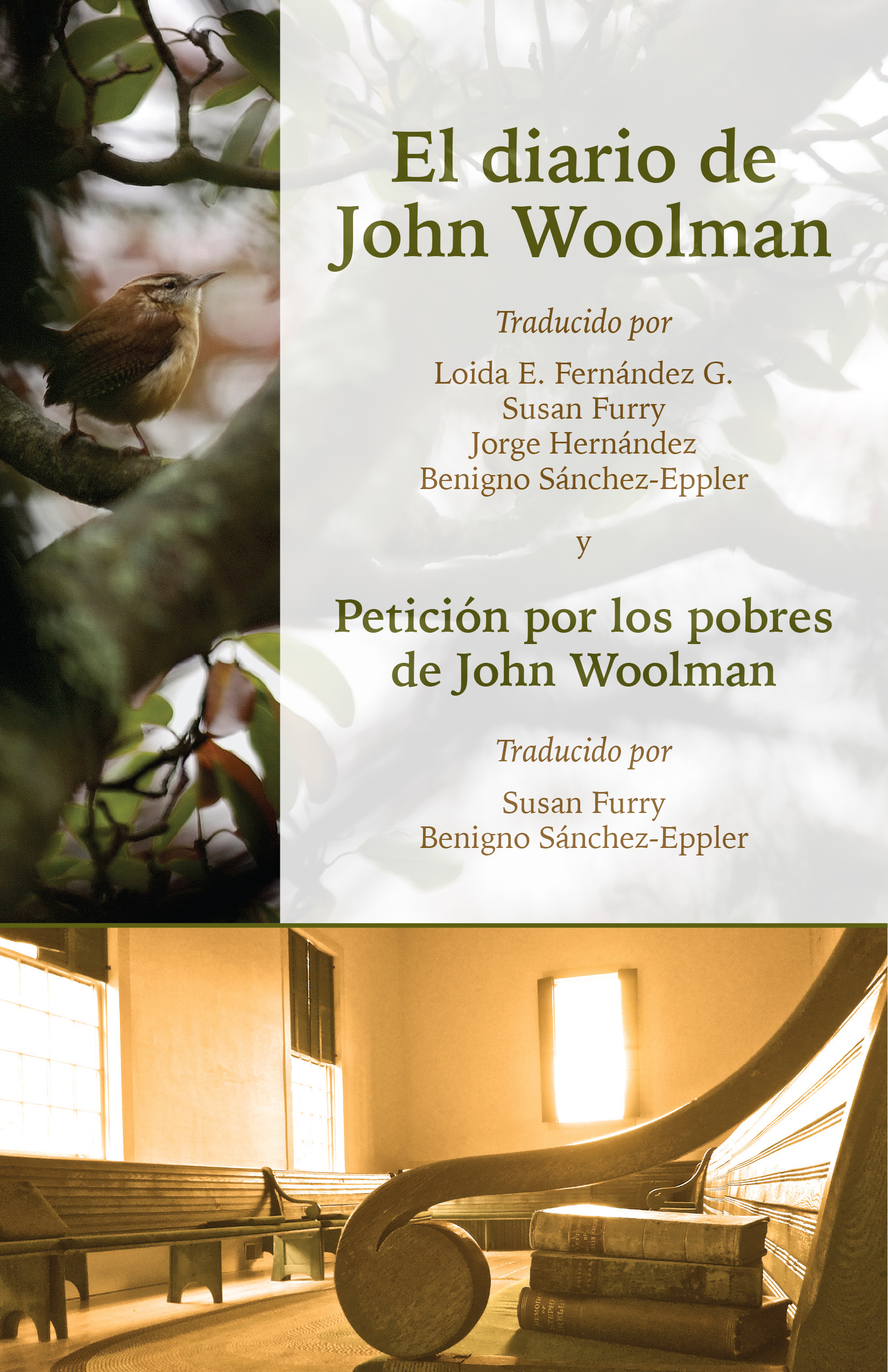
This book is the spiritual autobiography of one of the most influential Quakers and abolitionists of all time, John Woolman. Woolman’s journal was first published in 1774 (less than two years after his death). His life, as recorded by in his own words, is considered to be the finest representation of the unique culture of Quakers; a culture of beautiful simplicity and community cohesion. Through his journal, John Woolman perfectly captures the essence of Quakerism, by focusing not on dogmas and pretenses, but rather on practical testimonies for equality, simplicity and peace.
The Message
“There is a harmony in the sound of that voice to which Divine love gives utterance, and some appearance of right order in their temper and conduct whose passions are regulated.”
– John Woolman
In addition to his journal, John Woolman authored many other writings, one of the most well-known being his essay titled “A Plea for the Poor”. Due to the timeless importance of both his journal and essay, they’ve been combined into this one book, The Journal of John Woolman and A Plea for the Poor. With it, readers can not only learn more about John Woolman, himself, but also gain insight into Quaker culture and history. This amazing book is one of few whose messages remains relevant across time and place; the most important message being the message of “Divine love”.
The
Author
Distressed by the selfish indulgences of society, he actively sought to clear his life of such, by freeing himself from his own self-will and pride, as well as, refusing to buy or sell goods produced through the oppression of others.
His heart for ministry led him to spend much of his time visiting both the poor and the wealthy, pleading on behalf of the oppressed. His travels took him throughout the American colonies, and even to some surrounding tribes of Native Americans. Towards the end of his life, he went to England and labored against the trafficking of slaves within the British Empire. It was during this time, that he contracted smallpox and died in England in 1772
John Woolman (1720-1772) was born in Northampton, New Jersey. He worked as a tailor, merchant and lawyer, but ultimately left these professions, as he found such entanglements cumbersome for him in his spiritual journey and at odds with his ever-growing heart for ministry.
Woolman was one of the first Quakers whose religious conviction led him to devote his life to the eradication of slavery and oppression. His writings, recounting that work, are among the classics of English prose, as well as, Quaker literature.
“My every trial was a fresh incitement to give myself up wholly to the service of God, for I’ve found no helper like him in times of trouble.”
– John Woolman
"a model for us all"

John Woolman has such a sensitive, kind, and loving heart. He was so concerned for the welfare of his fellow colonial Americans no matter what the color of their skin. He was out there talking to people about the evils of slavery back in the 1650’s long before others did the same. His heart was open to God’s love and therefore he was filled with love. This love, which only comes from God, poured out onto all. He didn’t move or speak unless the Spirit of God told him to do so. He is a model for us all. I highly recommend this book.

– Tim R.
"an exponent of the abolition cause"
John Woolman was instrumental in helping to discourage slave holding among the Quakers. He was an exponent of the abolition cause of the Quakers who, in turn, were the first to free their slaves and endorse emancipation to the fullest.
– Char M.
"wonderfully meek and devoted"
John Woolman’s journal proves him to have been wonderfully meek and devoted. To him, no discomfort or misfortune was without a silver lining or a pleasing mercy bestowed by God. He strove (usually, with success, I think) to perceive the will of the Lord in every undertaking. He had a highly educated conscience that moved him to constant humility in beseeching forgiveness of his errors. He was tireless in pure, selfless service for the relief of the lowliest creature and for the purposes of the Highest. I am very glad to have peered into the heart of this man through his own eloquent hand. I hope I have learned from him.
– Kirt
"a testament to Quaker values"
The man is a testament to the Quaker values of simplicity and equality. There is indeed much that we, in the 21st century, could learn from him and the timeless examples and legacy he left us through his writings.
– Ray M.